
-
Podcast No. 44: Riley Ungaretti

Riley (Kenney) Ungaretti is the last person we want to see on the field or court at Butte High sporting events.
We would rather see her sitting on the sideline watching the action.
Ungaretti is an athletic trainer for the Bulldogs. She is part of the terrific St. James Sports Medicine team that provides athletic trainers to multiple high school, middle schools and colleges in Southwest Montana.

In today’s podcast, Riley discusses her duties and her training to prepare for any situation that might come up. She talks about her role in guiding injured athletes back to the playing field. She talks about the on-field situation involving Buffalo Bills safety Damar Hamilin a couple of weeks ago on Monday Night Football.
Click here to listen in as Riley also discusses growing up in Polson, where she was a three-sport standout for the Polson Pirates. She talks about her deep ties to the Mining City on both sides of the family. Her grandmother is Butte radio legend Connie Kenney. Her father is Tom Kenney, a star for Butte Central’s 1984 State championship boys’ basketball team.
-
Podcast No. 43: Bill Rundle

For a half a century, Bill Rundle was the man behind the Knievels.
He started working for Evel Knievel when he was just 14 years old. Then, he worked as the crew chief for Robbie Knievel for 35 years.
Can you imagine the things that the Butte native and resident saw during his time with the world’s most famous daredevils?
Can you imagine the festival-free summers in the Mining City that we would have year after year had Rundle not started Evel Knievel Days? The first year was Evel Knievel Week. Then it was shortened to Evel Days. He brought all kinds of stuntmen and performers to his hometown. That includes Spanky Spangler jumping off Hotel Finlen on fire.
Most people do not have a friend they can call and ask to jump off a tall building — on fire or not.

More importantly, Evel Days showed others how great of a festival town Butte can be. While Evel Days faded away, we have the Folk Festival and the Irish Festival that live on. Both got a major assist from Rundle and Evel Days.
For his career, Rundle was inducted, along with Robbie Knievel, in the Hot Shoe Hall of Fame in February 2021.
Click here to listen in as Rundle talks about Evel Days and his career working with Evel and Robbie. Listen as he talks about his discussions with Robbie before some of his biggest jumps. Listen as he talks about the passing of Robbie, a life-long friend who meant the world to him.
-
On my trike, I was Robbie Knievel

The parade will be hard to beat.
It was the Fourth of July in 1979, and I was 5 as I took in the parade on Montana Street in Butte. Like always, my family watched from our spot by the Bonanza Freeze.
The more than 100 parade entries included the Anaconda Copper Co. extravaganza, Tony the Trader, the Army’s Golden Knights parachute team and parade marshal Frank Quinn.
In the next day’s Montana Standard, Rick Foote called the parade, which celebrated Butte’s 100th year, Butte’s best parade in a decade. (Click here for the podcast version of this column.)
An estimated crowd of 52,000 lined the street on that picture-perfect summer day.
The parade was so good that I do not even remember that Evel Knievel rode in it in his Formula 1 dragster. I do, however, remember his son.
As Foote pointed out, 17-year-old Robbie Knievel stole the show.
I could not believe my eyes as Robbie, dressed in a jump suit just like Evel, rode his motorbike up and down the street.
After Robbie made a few passes by us, an El Camino came up, pulling a ramp. The car stopped right in front of me. My eyes nearly popped out of my head as Robbie hit the ramp and flew over the top of the car, landing smoothly on the street.
From that day on, if I was on a trike or bike — or running around the neighborhood pretending to hold the handlebars of a motorcycle — I was Robbie Knievel.
Nobody on the planet could hold a candle to the coolness of Robbie.
You could keep your Evel Knievel rocket toys. I had my imagination, and I was Robbie Knievel.
“The Kaptain” passed away last week after a battle with pancreatic cancer. He was 60.
I feel like a piece of my childhood died with him.

Robbie’s coolness never got old. Not for me. About 10 years after that El Camino jump, Robbie jumped the Caesars Palace fountains, completing the gutsy stunt 22 years after his father nearly died trying to do the same.
That jump was the talk of Butte for weeks. It was on pay-per-view television, so we only got to see the highlights of Robbie racing to the ramp before it got cut off on the news.
Still, it was one of the coolest things of the decade.
Robbie’s craziest stunt — at least in my mind — came in 1999. That is when he jumped 130 feet between the two 13-story Jockey Club towers in Las Vegas. I do not know if Robbie was scared, but the look of sheer terror on the faces of his family in the moments before the jump will stick with me forever.
That same year, Robbie jumped the Grand Canyon.
Well, he did not jump over the middle of the Grand Canyon. You need an airplane to do that. But the part he jumped was gutsy enough.
The funniest jump came in 2004. Robbie cleared a record 10,000 dishes. It was sponsored by Dawn Dish Soap, and it was a record, I assume, because nobody ever thought of jumping that many dishes before.
His longtime friend Joe Little called to give me the details when I was working on the sports desk at The Montana Standard.
“The kid has guts,” Joe said, in a major understatement.
Later that year, Robbie jumped a military aircraft on top of the USS Intrepid live on TNT. He made that jump to commemorate the premier of the TNT original movie about his dad.
Robbie knew he did not have the room to pull off the landing. So, he laid down the bike after he touched down and slid into a bunch of haystacks to keep him from tumbling off the side.

Before the jump, Robbie took the microphone from legendary TNT sportscaster Craig Sager and answered the questions he wanted to answer.
After the jump, Robbie and Sager had a comical tug of war with the microphone. The unimpressed Sager won, but not easily.
In 2005, Robbie was featured on the reality television series Knievel’s Wild Ride. TV crews followed Knievel around the country as he and his team drove from jump to jump.
It was wildly entertaining. It was especially entertaining when he made a crack about his father, not realizing the Last Gladiator might actually watch the show.
The show, by the way, had great ratings. A&E wanted to do another season. However, as Robbie told family members, he was too big of a pain in the butt, and the network opted to cancel after one season.
I watched every episode.
Several years later, Robbie jumped in front of Mirage volcano in Vegas on New Year’s Eve. It looked like he was jumping over it, which he would have if they would have let him.
After that, I heard some motocross kids laughing at Robbie. They pointed out that he was not jumping on the same bike his dad did. Robbie’s was much lighter and had much greater suspension.
That is true, but until those guys jump over the Grand Canyon, they can stick a sock in it. When they go from tower to tower 13 stories above the ground, then they can talk.
Robbie Knievel was daredevil in the truest meaning of the word. He risked his life and health to entertain the masses.
I was among those masses, and Robbie never disappointed to entertain me.
In 2003, my good friend Matt Vincent married Robbie’s little sister, Alicia. I was one of the groomsmen.
After a few beers, I mustered up the guts to go up and talk to Robbie. The first thing I did was tell him about that Fourth of July parade.
“I remember that,” Robbie said, excited by the memory. “That was Ferriter’s El Camino.”
He was talking about Jack Ferriter, another Butte legend who was pals with Evel.
Then, Robbie and I talked for a solid hour. He laughed when I told him that I pretended to be him every time I got on my bike.
That was a night and a conversation that I will remember forever. We laughed and laughed.
We all know Robbie was not the perfect person, and some people were quick to point that out after his passing. He got in to some trouble from time to time.
It was good to see that he owned up to his problems, and opened up about his fight for sobriety.
That could not have been easy to do. It took a different kind of guts.
Robbie Knievel was, indeed, human. And knowing that somehow makes him even more impressive in my book. He did things on a motorcycle that no human should have ever tried.
Like his father, Robbie Knievel embodied the spirit of the Mining City. While both would have a hard time winning a popularity contest in their hometown, they were always the perfect ambassadors for our rough-and-tumble mining camp.
They were Butte, America to its core.
During Evel Knievel days in 2006, I got to stand up next to the fence, right by the ramp, as Robbie jumped 180 feet on Park Street.
It was not the longest or the most dangerous jump he ever pulled off. Robbie was older, and he was getting thick around the waist.
Still, being that close to a Knievel jump ranks pretty high on my list of cool things.
That day, though, will always take a back seat to the Butte Fourth of July parade in 1979.
Rick Foote undersold it. It was not the best parade of the decade; it was the best parade of all time.
There I was, standing 10 feet away from Jack Ferriter’s El Camino as Robbie Knievel sailed over the top.
I guess the rest of the parade was probably alright, too.
— Bill Foley, who has never jumped an El Camino on a motorcycle, can be reached at foles74@gmail.com. Follow him at twitter.com/Foles74. Listen to the ButteCast on Apple Podcasts or Spotify.
-
Richards, Pumnea selected Leskovar Athletes of the Week

Butte High seniors Emmarie Richards and Kip Pumnea have been named the Leskovar Honda Athletes of the Week.
Both received the honors after their respective coaches praised their effort over the first part of the 2022-23 seasons.
Richards, a 5-foot-9 guard, averages a team-best 10.1 points on the season. She scored 11 points in Butte High’s 50-48 home loss to Missoula Big Sky on Friday.
“Emmarie has been a great leader this year,” Butte High girls’ hoops coach Bryan Arntson said. “She has been asked to do a lot for our team and has been exceptional in her role.”
Richards also leads the Bulldogs in steals and assists.
“She is a true competitor and the type of kid that every coach wants on their team,” Arntson said. “She continues to gain confidence in her abilities and has the skill set to take over games.
Pumnea takes home the boys’ award after a second-place showing at 132 pounds at the Jug Beck Rocky Mountain Classic wrestling tournament in Missoula. The tournament included teams from Montana, Idaho and Washington.
“Kip continued his fantastic senior season by making it to the finals in the prestigious Jug Beck Rocky Mountain Classic in one of the most competitive weights in the tournament,” Bulldog boys’ wrestling coach Cory Johnston said. “He did so coming into the tournament as the No. 6 seed and by beating several state finalists in their respective states.”
Pumnea, a fixture in the Bulldog lineup since his freshman year, placed fourth at 132 pounds at the Class AA State tournament last February.
Leskovar Honda, home of the 20-year, 200,000-mile warranty, is honoring the finest student-athletes from the Mining City in an effort to encourage more children to get up, get out and try all kinds of sports and activities.
-
KC basketball schedule

Following is the Knights of Columbus Athletic Club’s four-man basketball schedule for the week of Jan. 16.
Monday
6 p.m. — Parish vs. OFU
7 p.m. — OFU vs. Wolfpack
8 p.m. — Lacey Agency vs. Rooney’s Republic
9 p.m. — Towel Boys vs. ISOsTuesday
7 p.m. — The Backups vs. Logan’s
8 p.m. — Logan’s vs. ISOs
9 p.m. — Byrdy vs. Bomb SquadWednesday
6 p.m. — Parish vs. The Backups
7 p.m. — Dream Team vs. Poi Time
8 p.m. — Rooney’s Republic vs. WolfpackThursday
6 p.m. — Towel Boys vs. Bomb Squad
7 p.m. — Byrdy vs. Poi Time
8 p.m. — Lacey Agency vs. Dream Team
-
Bulldog girls’ subvarsity roundup

The following reports were submitted by Butte High’s girls’ basketball coaches.
Freshmen
Butte High 35, Kalispell Glacier 30
KALISPELL — Gracie Jonart scored 11 points, and Emma Johnson tossed in 11 as Butte High grabbed a big road victory Jan. 6.Franki Salusso also led the Dogs with great guard play, controlling the tempo of the game and for giving great energy on defense. Jonart and Johnson cleaned up the glass with aggressive rebounding for the Dogs. Ally Godbout contributed to the win with nice guard play and staying aggressive on the defensive side of the ball.
The coaches named Salusso is the Junkyard Dog player of the game because of her relentless defense and leaving everything out on the court.
Kalispell Flathead 46, Butte High 45
KALISPELL — Franki Salusso poured in 21 points, but the Bulldogs lost a nail-bitter Jan. 7 to the Bravettes.Gracie Jonart scored eight points, Ally Godbout tossed in six, and Emma Johnson scored five for Butte High, which got the most complete to date. The entire team played well on both sides of the ball.
Tatum Giacomino competed hard on defense and cleaned up the glass with great jumping ability.
Alexxys Danielson and Makenzie Dayhuff played their best game of the season on both sides of the court.
Salusso is the Junkyard Dog player of the game with that Bulldog mentality on the defensive side of the ball.
Butte High 47, Missoula Hellgate 22
MISSOULA — Frankie Salusso scored 15 points to lead three Bulldogs in double figures scoring as Butte High rolled to the road victory Tuesday.Gracie Jonart tossed in 13 points, and Ally Godbout netted 10 in the win. Emma Johnson contributed with seven points.
Coaches say Godbout played well in the guard spot and was patient in directing the team on the offensive side of the court as well as shooting very well from beyond the arc. Alexxys Danielson played well in the post and was getting nice looks within Hellgate’s zone defense.
Johnson is the Junkyard Dog for the Hellgate game for her tough post defense against Hellgate.
Sophomore
Kalispell Glacier 47, Butte High 35
KALISPELL — A 14-point performance from Gracie Ferriter paced the Bulldogs in the Jan. 6 loss.Chelsi Lyons and Madisyn Swanson each scored six points, and Jaycee Cleveland netted five. Lyons was also cited for her hustle.
Kalispell Flathead 39, Butte High 34
KALISPELL — Addelei Hiatt and Jaycee Cleveland each scored eight points for Butte High in the Jan. 7 loss.The Bulldogs also got six from Madisyn Swanson, four from Gracie Ferriter and three apiece from Sidney Whitaker and Chelsi Lyons. The coaches also credited Hiatt and Lyons for their hustle and stellar defense.
Missoula Hellgate 39, Butte High 26
MISSOULA — Gracie Ferriter netted a dozen points to lead the Bulldogs in Tuesday’s road loss.The Buldogs also got six points from Addelei Hiatt and four from Jaycee Cleveland. Bulldog coaches pointed to the great hustle and defense by Jonart, Hiatt and Karsyn Lambrecht. Cleveland was a force on the boards.
Junior varsity
Kalispell Glacier 43, Butte High 31
KALISPELL — Cadence Graham’s 12 points led the Bulldogs in the road loss Jan. 6.Ashby Lee scored six points, and Harlee Muffich and Sonya Trudnowski followed with five and four. Autumn Clary displayed great effort by getting rebounds and hustling on defense. Muffich attacked the boards well, and Graham contributed on both ends of the floor
Kalispell Flathead 48, Butte High 47
KALISPELL — Autumn Clary shot 3 for 3 from behind the 3-point line in the third quarter, and she scored 11 points to lead the Bulldogs.Butte High, though, dropped the one-point decision to Flathead.
Taylor Drakos displayed great effort on both ends of the floor. Cadence Graham, Elli Quist and Autumn Clary applied great pressure in full court press situations.
Missoula Hellgate 43, Butte High 36
MISSOULA — Taylor Drakos scored nine points, and Cadence Graham netted eight for the Bulldogs in Tuesday’s tough road loss.Ashby Lee tossed in seven points, and Sonya Trudnowski chipped in with six.
The team had a great comeback in the fourth quarter from down 13 points to pull the game within four. The team fought back hard, with Lee crashing the boards well. Autumn Clary hustled on both ends of the court.
-
Podcast No. 42: Rick Sparks

Rick Sparks is a Butte Central coaching legend. He led the Maroons to five state championships — four in track (three girls and one boys) and one in wrestling.
Before that, however, “Sparky,” as he is affectionately called, was a Butte High Bulldog.
Sparks was an All-State center on Butte High’s undefeated State championship team in 1964. He is one of seven members of that team to be inducted into the Butte Sports Hall of Fame. Sparky, who played football at the University of Montana, was inducted in 2009.
As Pat Kearney once said, Sparky is the only hippie in Butte’s prestigious Hall of Fame.

Listen in as Sparky talks about his career as an athlete and a coach. Listen how he describes practicing against the “whining” Bob Beers. Listen how he still wishes he gave the ball to Judge Brian Morris just one more time in that classic 1981 overtime loss to Butte High. Listen to how he confronts crybaby fans at Grizzly games.
Sparky, who lives in Missoula, was in town this week to watch his grandson, Missoula Hellgate senior Mario Rosemond, play basketball against Butte High.
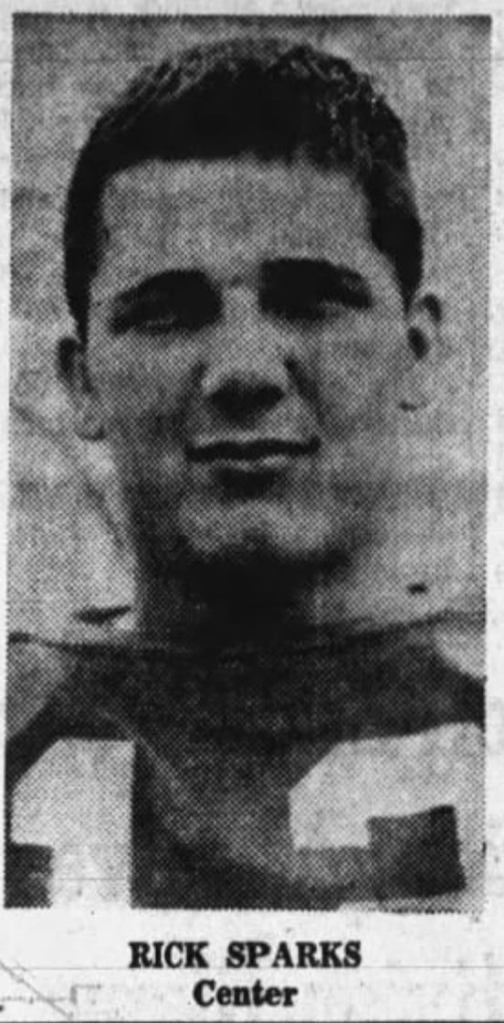
Sparky in The Montana Standard in 1964. -
Podcast No. 41: Blake Hempstead

Blake Hempstead is the biggest defender and the biggest supporter of his hometown of Anaconda.
Nobody loves the Smelter City or the Anaconda Copperheads more than Blake, a 1993 graduate who has been the radio voice of the Copperheads for more than two decades. He works hard to make sure young boys and girls in Anaconda want to grow up to be Copperheads.
Click here to listen in as he talks about growing up in Anaconda and seeing how the town has changed over the years. Listen as he talks about the renovation of Memorial Gym and throwing a fit and quitting the school board in the middle of an online meeting. Listen to his man crush on Butte Central coach Brodie Kelly. Listen in to hear how Blake’s love of Anaconda is as genuine as it comes.
-
Damar Hamlin scare brought out the best and the worst
In his viral comments following the Montana-Montana State football game, Bobcat quarterback Tommy Mellott used a loaded word.
“Quit trying to dehumanize those guys over there,” the Butte High graduate said, in part, in a live television interview.
Most people seemed to see what Mellott was saying. While it was probably not possible to do it at the time, he was trying to save the Grizzly players in the moment.
He knows what it is like to lose a big game, and he did not want his fans to pile on the Grizzlies. (Click here for a podcast version of this column.)
Since the comments seemed to strike a chord with so many, there could be some hope that his words will help down the line.
The word “dehumanize” is what really jumped out. It seemed to have a lot of people scratching their heads because it is not something they thought they would hear following a sporting event.
Looking back at it nearly two months later, it is easy to see that Mellott used the perfect word. Dehumanizing is what sports fans — and so many of those in charge of running the games — do way too often.
We clearly saw that when Buffalo Bills safety Damar Hamlin nearly lost his life on live television last Monday night.
Before Hamlin even made it to the hospital, Skip Bayless, of the television show “Skip and Shannon: Undisputed,” tweeted that the game was too big to postpone.
After it became apparent that the tweet clinched Bayless’ spot as the biggest jerk in sports, he tweeted that he was sorry if his tweet was misunderstood.
He never said he was sorry for being so insensitive or crude. He offered the “if you were offended” apology, which is not an apology at all.

It also made his tweet appear even worse since he is, after all, someone who makes his living with the written and spoken word. So, in addition to confirming his jerk status, he showed us that he is not that smart with words, either.
Others went to social media saying the game must be finished because of its fantasy football implications.
None of those idiots, however, can compare to the National Football League when it comes to dehumanizing its players.
After the ambulance left the field, players were supposedly told they have 5 minutes to warm up to resume the game.
The league denied this the next day, but it was clearly conveyed to the players. Why else would Joe Burrow start warming up by throwing the football?
Why else would announcer Joe Buck repeatedly tell his audience that the players were getting 5 minutes before the game started again?
As much as he has annoyed me over the last 25 years, Buck is a trusted voice. He would not make something like that up.
Can you imagine if you are at your office, and your co-worker drops on the floor with cardiac arrest. The co-worker is taken to the hospital after CPR was administered, and you are left wondering if he or she is going to make it as the ambulance drives away.
Then, your boss comes in and says, “OK, everybody take 5 minutes to regroup and then get back to work.”
Pretty much every boss in pretty much every company has way too much compassion to even think about this. The NFL, though, said “back to work.”
It was clear that the coaches put a halt to such silliness.
While the league tried to deny its insensitivity, we can easily see right through that. We have seen the league and teams dehumanize players so many times over the years that we know better.
We saw that when Miami Dolphins quarterback Tua Tagovailoa wobbled like a punch-drunk boxer after taking a hit in a game earlier this year. The Dolphins “doctor” cleared the quarterback to go play, and the team told us that it was a back injury.
Unless the hit somehow turned the quarterback’s spine into Jell-O, it was clear to everyone in the free world that Tagovailoa suffered a concussion.

The Dolphins had him start a game four days later, and he could have easily been killed when he suffered another concussion when he was violently thrown to the turf by a Cincinnati Bengals defensive lineman.
That the NFL makes players play games on Sunday and then again on Thursday shows that they give very little about the health of its players in the first place.
You see the NFL dehumanize players all the time. You see it when a roster-bubble player is cut, with an injury settlement, the second he goes down in camp.
You see it when a coach yells “next man up,” when a player is hurt.
It happens in other sports, too.
I once asked Butte native Rob Johnson how he played most of a season for the Seattle Mariners with torn labrums in both hips. I also asked him why. The pain must have been excruciating each time he crouched down to catch.
The reason he played, Rob said, was that he knew they would send him to the minors or maybe even cut him if he said he was hurt. Since he was not an established star, Johnson knew he was disposable.
That’s a word you hear a lot in sports, too. They refer to human beings as “expendable” and “disposable.”
Those are words we should save for cheap razors, not people.
Thankfully, Damar Hamlin is doing better. He is not out of the woods yet, but he has shown signs of improvement.
If there is a silver lining to the Hamlin scare is that it also showed off the very best in people.
We saw that with the first responders who literally brought Hamlin back to life on the football field.

We saw that with the announcers and ESPN studio analysts. A script does not exist on how to handle such a situation, and, for the most part, they handled it elegantly.
We also saw the good from the fans donating millions of dollars to Hamlin’ s toy drive. His original goal for the drive was to raise $2,500. As of this weekend, it was over $8 million.
You see it when you go out in the community and hear people talking about Hamlin. So many people are concerned for the young man whose name they probably never heard before.
A divided country is united in its concern for a stranger.
When the 24-year-old player fell to the field, most people saw him as something more than a football player. They saw him as someone who could have been their son, their brother or their friend.
They saw him as human.
When it comes to cheering on professional — or even college — teams, most of us do not know a single player on the roster. Jerry Seinfeld once joked about that.
“You’re actually rooting for the clothes, when you get right down to it,” he said. “You are standing and yelling for your clothes to beat the clothes from another city.”
There is so much truth to that.
Hopefully, this terrifying situation with Damar Hamlin will help us all start to see the human beings inside of those clothes.
— Bill Foley, who is borderline human, can be reached at foles74@gmail.com. Follow him at twitter.com/Foles74. Listen to the ButteCast on Apple Podcasts or Spotify.
-
Gurnsey, Badovinac named Leskovar Athletes of the Week

Butte High senior Cameron Gurnsey and Butte Central senior Brooke Badovinac are the first recipients of the Leskovar Honda Athletes of the Week honors.
Badovinac takes home the girls’ honor after scoring 38 points in Butte Central’s 68-56 home win over Livingston. The 38 points set a BC girls’ record against Class A competition.
The big night also lifted Badovinac over 1,000 career varsity points. She scored 671 of those points during her junior season. No high school boy or girl in Butte has ever scored more in a single season.
Badovinac has signed to play basketball at Montana Tech.
Gurnsey receives the boys’ award after he scored a total of 34 points to help lead the Bulldogs in home wins over Kalispell Glacier and Kalispell Flathead.
His 18-point performance against Glacier on Friday included a 3-pointer to put the Dogs up one late in a 60-55 win. His 16 against Flathead included a pair of huge threes down the stretch. He scored 12 points in the fourth quarter of a 59-48 victory.
Gurnsey has signed to play receiver on the University of Montana football team.
Mike Beckman at Leskovar Honda will have a certificate to honor these outstanding athletes. Leskovar Honda is the home of the 20-year, 200,000-mile warranty.
 The ButteCast with Bill Foley